Posted: 10 Nov, 2026 Contributor: Saksham Wadhwa
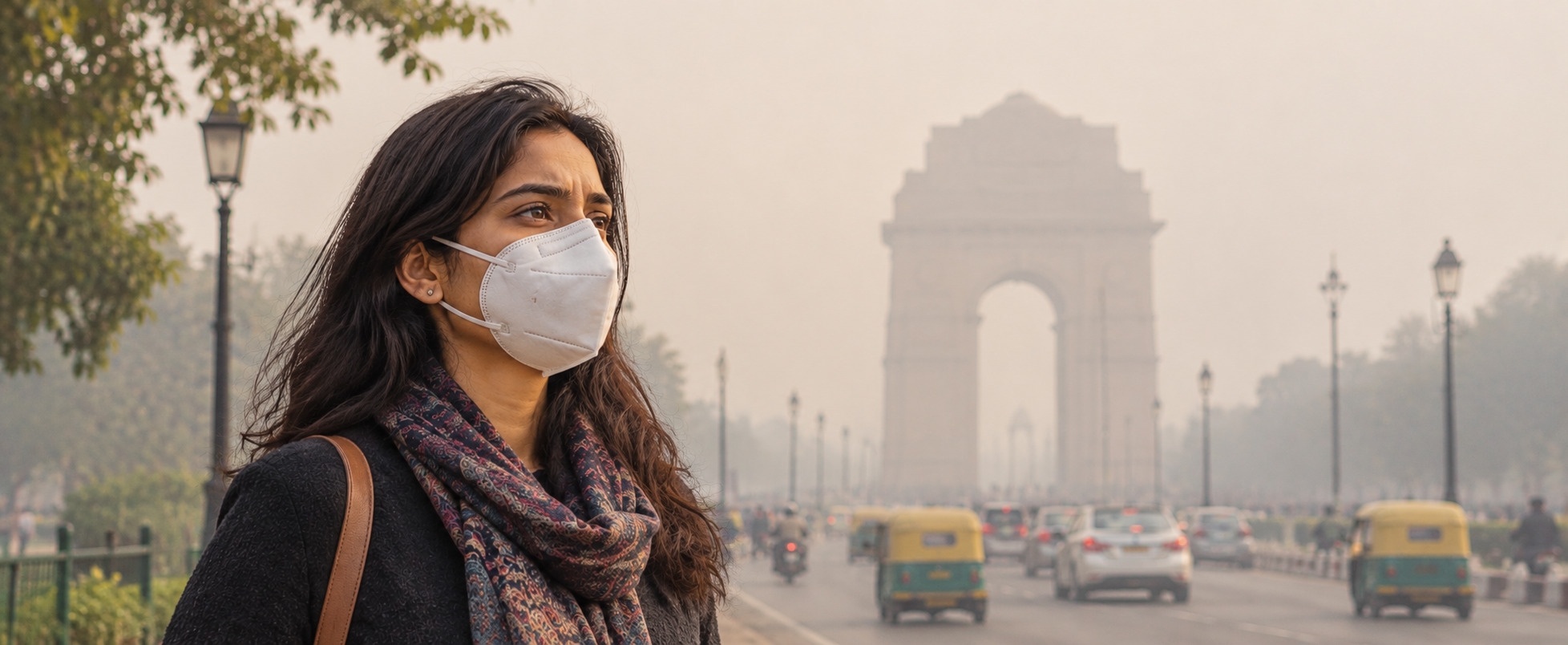
Delhi NCR is home to nearly 7.86 crore people, according to population figures cited by the National Capital Region Planning Board. Every day, millions of people travel to work, attend schools, run businesses and go about their usual routines across Delhi, Noida, Gurugram, Ghaziabad and Faridabad. But as winter approaches, one concern becomes difficult to ignore: the quality of the air we breathe.
For many residents, the change is familiar. The morning sky starts looking hazy, distant buildings become difficult to see, and stepping outside can leave the throat feeling dry or irritated. Some people experience coughing, watery eyes or breathing discomfort, while those with existing respiratory problems may find their symptoms becoming more difficult to manage.
Air pollution in Delhi NCR is often discussed as a seasonal problem, particularly during October, November and December. However, its effects are not limited to a few winter months. Pollution can affect everyday health, outdoor activities, children's routines and the quality of life of people living in the region.
The question is no longer just about why Delhi NCR experiences high pollution levels every year. It is also about understanding how this pollution affects our bodies and what practical steps we can take to reduce our exposure.
Delhi NCR's air pollution problem is not caused by one particular activity. It is the result of several pollution sources operating simultaneously across the region. Vehicles, industries, power plants, road dust and construction activities all contribute to the problem, but the extent of their contribution differs depending on the location, time of year and method used to measure emissions.
A study published by the Council on Energy, Environment and Water (CEEW) in March 2019, titled What Is Polluting Delhi's Air? Understanding Uncertainties in Emissions Inventories, compared five different studies examining pollution sources in Delhi and NCR. One of its important findings was that transport and road dust were among the major contributors to particulate pollution, although the estimated contribution varied considerably between studies.
According to the CEEW analysis, road dust accounted for approximately 35.6% to 65.9% of PM10 emissions across the studies examined. This made it the largest identified contributor to PM10. For PM2.5, transport contributed between 17.9% and 39.2%, while road dust accounted for another 18.1% to 37.8%. These figures demonstrate how everyday activities, including road travel and dust generated on busy roads, can contribute significantly to the pollution problem.
But why do these figures differ so much? The report explains that the studies used different geographical boundaries, sampling locations, time periods and methods of calculating emissions. Some examined Delhi alone, while others included parts of the wider NCR. This means that the contribution of individual pollution sources cannot always be represented by one fixed percentage for the entire region.
Weather conditions and seasonal changes also make the situation more complicated. Pollution levels can vary depending on the time of year and atmospheric conditions, which is why the problem often becomes particularly noticeable during Delhi NCR's winter months.
Another important aspect is the presence of particulate matter. PM10 and PM2.5 refer to airborne particles classified according to their size. PM10 includes particles with a diameter of 10 micrometres or smaller, while PM2.5 refers to much finer particles measuring 2.5 micrometres or smaller. Because of their extremely small size, PM2.5 particles can penetrate deeper into the lungs and pose a greater concern for human health.
The CEEW report makes one thing clear: tackling Delhi NCR's air pollution requires more than focusing on a single source. Vehicle emissions, industrial activity, road dust and construction-related pollution all need attention. Understanding where these pollutants come from is an important first step towards finding effective solutions.
The effects of air pollution are not always immediately noticeable. While some people experience irritation or breathing difficulties after spending time outdoors, others may not recognise the impact of repeated exposure until health problems develop.
According to the World Health Organization, air pollution is associated with respiratory and cardiovascular diseases and can contribute to serious long-term health complications.
Some of the common ways poor air quality affects the human body include:
1. Respiratory Problems: Fine particulate matter and other pollutants can irritate the airways, causing coughing, throat irritation, wheezing and breathing discomfort. People with asthma, bronchitis and other respiratory conditions may experience worsening symptoms during high-pollution periods.
2. Effects on Heart Health: Air pollution is not limited to the lungs. Fine particles can contribute to inflammation and cardiovascular stress. Long-term exposure is associated with an increased risk of heart disease and stroke.
3. Eye and Throat Irritation: Burning or watery eyes, a scratchy throat and persistent irritation are common complaints during periods of poor air quality. These symptoms can become particularly uncomfortable for people who spend several hours outdoors.
4. Impact on Children: Children's lungs are still developing, and they often spend time playing or participating in outdoor activities. Exposure to polluted air can affect respiratory health and aggravate conditions such as asthma.
5. Greater Risks for Older Adults: Older people and individuals with existing heart or lung conditions are particularly vulnerable. Even relatively short exposure during severe pollution episodes may cause discomfort or worsen existing health problems.
Pregnant women are another group that should take extra care during periods of poor air quality. It is important to follow medical advice rather than dismissing persistent symptoms as ordinary seasonal irritation.
While individuals cannot solve Delhi NCR's air pollution problem on their own, there are several practical measures that can help reduce daily exposure. The aim is not to stop living normally but to make a few informed changes to everyday routines, particularly when pollution levels become very high.
One of the simplest habits you can develop is checking the Air Quality Index before planning your day. Instead of relying only on whether the sky looks clear, look at the actual air quality readings for your area.
India's AQI is divided into six categories:
Good (0–50)
Satisfactory (51–100)
Moderate (101–200)
Poor (201–300)
Very Poor (301–400)
Severe (401–500)
These categories help people understand the possible health implications of the air they are breathing. For example, when the AQI enters the Poor category, outdoor exposure can cause breathing discomfort, particularly after prolonged periods. At Very Poor and Severe levels, the risks become more significant, including for otherwise healthy individuals.
Check the CPCB's official AQI portal or the Sameer mobile application before going for a morning walk, sending children out to play or planning outdoor exercise. Remember that air quality can differ between locations, so checking readings close to your area is more useful than relying on a single city-wide number.
Morning walks and outdoor exercise are part of many people's daily routines in Delhi NCR. However, exercising in heavily polluted air can increase the amount of pollutants you inhale because you breathe faster and more deeply during physical activity.
When the AQI is Poor or worse, avoid strenuous outdoor exercise. If the pollution reaches Very Poor or Severe levels, it is better to move your workout indoors and follow official health advisories.
You do not necessarily have to abandon your fitness routine. Indoor stretching, yoga, light exercises and home workouts can help you maintain regular physical activity without spending unnecessary time in polluted outdoor environments.
Also, do not assume that early morning is always the safest time to exercise. During winter pollution episodes, morning and evening air quality can be particularly poor. Check the AQI before deciding when to step outside.
If you have to travel outdoors during high-pollution days, wearing a well-fitted N95 respirator can help reduce your exposure to fine particulate matter.
Unlike ordinary cloth masks or loose-fitting face coverings, certified N95 respirators are designed to filter at least 95% of airborne particles under standard testing conditions. However, this performance depends on proper fit and use. Gaps around the nose and sides of the face can reduce their effectiveness.
Make sure the mask covers both your nose and mouth and fits comfortably without leaving noticeable gaps. Replace it when it becomes damaged, dirty, wet or difficult to breathe through.
A mask should be considered an additional protective measure, not a reason to spend longer periods outdoors during severe pollution.
Many people assume that staying indoors automatically protects them from outdoor pollution. While remaining inside can reduce exposure, polluted outdoor air can still enter homes through open windows, doors and ventilation systems.
During severe pollution episodes, keep windows and doors closed when outdoor air quality is particularly poor. If you have an air purifier with a HEPA filter, use it in the room where your family spends the most time, particularly bedrooms and frequently occupied living spaces.
It is also important to reduce indoor pollution sources. Avoid smoking indoors, burning incense sticks or using products that produce unnecessary smoke. Cooking can also generate particulate matter, so use an exhaust fan or kitchen ventilation whenever possible.
A clean indoor environment is particularly important for children, older adults and people with respiratory conditions who may spend more time at home.
Not everyone experiences air pollution in the same way. Children, older adults, pregnant women and people with existing heart or respiratory conditions need additional attention during high-AQI periods.
For children, consider shifting outdoor games and sports activities indoors when pollution levels are high. Schools and parents should pay attention to official advisories regarding outdoor assemblies, sports and other physical activities.
Older family members should avoid unnecessary outdoor trips during severe pollution episodes. If someone has asthma or another respiratory condition, they should continue following their prescribed treatment and keep their medication accessible.
Pay attention to symptoms such as persistent coughing, wheezing, chest discomfort or unusual breathlessness. If these symptoms develop or worsen, consult a healthcare professional. Severe breathing difficulty or chest pain requires urgent medical attention.
For people working in Delhi NCR, completely avoiding outdoor exposure is often unrealistic. Daily office commutes, school runs, business meetings and other responsibilities require travelling through busy roads and traffic corridors.
However, a few adjustments can help reduce exposure. Avoid spending unnecessary time near congested traffic junctions, construction sites and areas with visible dust or smoke. If possible, choose routes that take you away from heavily congested roads.
Keep your vehicle's cabin air filter properly maintained and use the recirculation setting when driving through heavily polluted areas, while ensuring adequate ventilation when outdoor air quality improves. If you use public transport, avoid waiting for long periods beside busy roads or idling vehicles.
These changes may seem small, but they can help limit the amount of polluted air you encounter during your everyday commute.
When pollution becomes a major concern, people often turn to suggestions about drinking warm water, herbal teas, eating certain fruits or consuming specific supplements to protect their lungs.
While maintaining a balanced diet and staying hydrated are important for general health, no particular food, drink or home remedy can neutralise the effects of polluted air or prevent the health risks associated with exposure.
A nutritious diet containing seasonal fruits, vegetables, whole grains and adequate protein supports overall well-being. However, it should not be treated as a substitute for reducing exposure, using appropriate protective measures or following medical advice.
Be particularly careful with products advertised as lung cleansers, detox drinks or pollution protection supplements. There is no reliable evidence that these can remove pollutants from the lungs or reverse the effects of air pollution.
Air purifiers have become increasingly common in Delhi NCR households, particularly during winter. But are they worth considering?
A properly sized air purifier with a genuine HEPA filter can reduce airborne particulate matter inside an enclosed room. It can be particularly useful in bedrooms, children's rooms and spaces where family members spend several hours.
However, choosing the right purifier matters. Consider the room size, the purifier's Clean Air Delivery Rate (CADR), filter quality and the availability of replacement filters. A purifier that is too small for the room may not provide the desired level of air cleaning.
Keep doors and windows closed while operating the purifier during high outdoor pollution periods, and maintain the filters according to the manufacturer's instructions.
It is also worth remembering that air purifiers do not remove every type of indoor pollutant. They should be used alongside sensible ventilation practices, source control and other precautions.
When Delhi NCR experiences Severe AQI levels (401–500), ordinary precautions may not be sufficient. At this stage, reducing exposure becomes particularly important.
The Ministry of Health and Family Welfare's public health advisory recommends avoiding outdoor physical activities during very high pollution levels. Vulnerable individuals should remain indoors and keep their activity levels low, particularly during severe episodes.
Here are a few things to prioritise:
Avoid outdoor exercise, running and unnecessary travel.
Keep children and older family members away from outdoor activities.
Use a properly fitted N95 respirator if outdoor travel cannot be avoided.
Keep indoor air cleaner by reducing smoke sources and using suitable air filtration.
Follow government advisories regarding schools, outdoor events and other activities.
Seek medical advice if you experience persistent coughing, breathing difficulties or chest discomfort.
Do not ignore symptoms simply because pollution levels are expected to improve after a few days. Your health should take priority over maintaining your usual outdoor routine.
While personal precautions are important, they cannot be the permanent solution to air pollution. A city with millions of residents cannot depend entirely on masks, air purifiers and reduced outdoor activities to manage a problem of this scale.
Long-term improvement requires coordinated efforts from government authorities, industries, businesses and residents. Better public transport, stricter control of vehicle emissions, construction dust management, responsible waste disposal and reduced industrial pollution are all important parts of the solution.
Individuals can also contribute through everyday decisions. Avoiding the burning of waste, maintaining vehicles, using public transport where practical and supporting cleaner practices in residential communities are small but meaningful steps.
Businesses and offices can play their part by maintaining indoor air quality, managing dust and emissions around their premises and helping employees stay informed during severe pollution episodes.
Clean air should not be treated as a seasonal luxury. It is a basic requirement for a healthy city and a better quality of life.
Delhi NCR's air pollution problem is not something that residents can simply avoid by staying indoors for a few days every winter. It affects people across age groups and occupations, from schoolchildren and office employees to outdoor workers and older family members.
However, understanding the risks and making informed decisions can help reduce unnecessary exposure. Checking the AQI, adjusting outdoor activities, using appropriate masks, maintaining cleaner indoor spaces and paying attention to vulnerable family members are practical steps worth adopting.
At OMKITCHEN Just Organic, we believe that looking after everyday well-being begins with making more conscious choices. Food, daily habits and the environment around us all contribute to our overall quality of life. While a balanced diet cannot protect anyone from polluted air, taking care of what we eat and how we live remains an important part of looking after ourselves.
The larger responsibility, of course, lies in working towards cleaner air for everyone. Until that happens, staying informed, taking sensible precautions and encouraging better environmental practices can help Delhi NCR residents make safer choices during high-AQI days.
Your email address will not be published. Required fields are marked *