Posted: 03 Nov, 2026 Contributor: Saksham Wadhwa
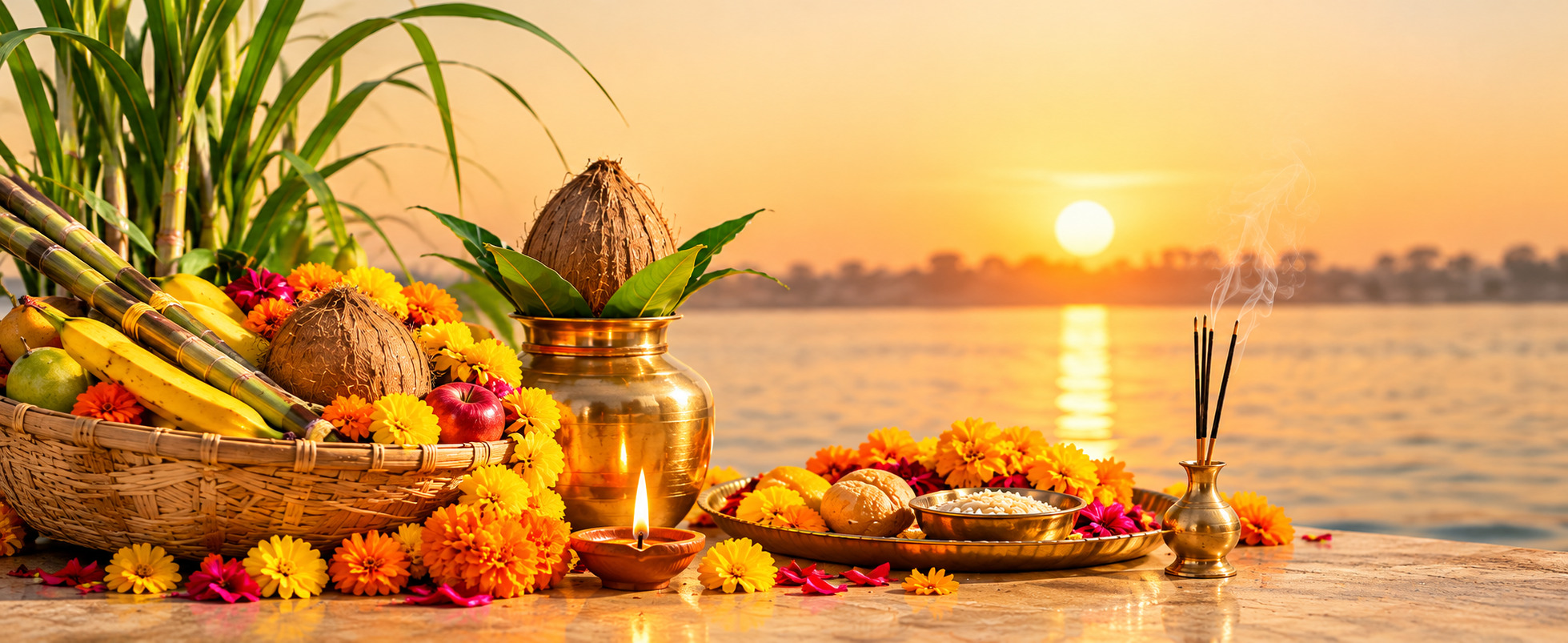
India celebrates countless festivals throughout the year, each with its own traditions, stories and cultural significance. Some festivals are marked by grand decorations and elaborate celebrations, while others are deeply rooted in prayer, discipline and gratitude towards nature. Chhath Puja belongs to the latter. It is a festival where devotees gather near rivers, ponds and other water bodies to offer prayers to the Sun God, often standing in water as the sun rises or sets.
For people from Bihar, Jharkhand and eastern Uttar Pradesh, Chhath Puja is much more than an annual religious occasion. It is a tradition that has been passed down through generations, bringing families and communities together. Even those who have moved away from their hometowns continue to observe the festival with the same dedication, whether they live in Delhi NCR, Mumbai or another part of the country.
Unlike many other Hindu festivals, Chhath Puja does not traditionally involve elaborate idol worship. Instead, devotees worship Surya Dev (the Sun God) and Chhathi Maiya, expressing gratitude for sunlight, life, good health and the well-being of their families.
But why do we celebrate Chhath Puja, and what makes its rituals so different from other Indian festivals? The answers lie in its history, religious beliefs and the close relationship between human life and nature.
Chhath Puja is primarily celebrated to honour Surya Dev, the Sun God, who is regarded as the source of light, warmth and energy necessary for life on Earth. Devotees also worship Chhathi Maiya, who is traditionally associated with the protection, happiness and well-being of children and families.
The festival is an expression of gratitude towards the natural forces that sustain life. Long before electricity, modern agriculture and scientific developments, communities depended directly on sunlight, seasonal changes, rivers and agricultural cycles for their survival. The sun played an essential role in growing crops, maintaining natural rhythms and supporting everyday life.
Chhath Puja reflects this connection between people and nature. Through prayers, fasting and offerings, devotees acknowledge the importance of the sun and seek blessings for their families.
Another distinctive aspect of Chhath Puja is that prayers are offered to both the setting and rising sun. While most religious traditions associate the rising sun with hope and new beginnings, Chhath also honours the setting sun. This is often understood as a reminder to show gratitude not only during moments of growth and success but also during periods of decline and difficulty.
For devotees, the festival is also an occasion to practise self-discipline, patience and devotion. The rituals require considerable preparation and commitment, particularly from those observing the traditional fast.
The exact historical origins of Chhath Puja are difficult to establish, but the festival is connected with several ancient Hindu traditions and stories. Sun worship has been practised in India for centuries, and references to Surya Dev appear throughout Hindu religious literature.
One popular belief connects Chhath Puja with the Ramayana. According to regional traditions, Lord Rama and Sita worshipped the Sun God after returning to Ayodhya following their exile. Some versions of the story associate Sita's prayers with the observance of rituals resembling Chhath Puja.
Another tradition links the festival with the Mahabharata. Draupadi and the Pandavas are believed to have worshipped Surya Dev during difficult times, seeking blessings and relief from their hardships. Karna, who is described as the son of Surya Dev, is also associated with sun worship. According to popular accounts, he regularly offered prayers to the sun while standing in water.
These stories form an important part of the festival's religious and cultural background, although they should be understood as traditional beliefs rather than historically verified accounts of its origin.
Over time, Chhath Puja became particularly significant in Bihar and neighbouring regions. Today, it continues to be observed by families across India and in countries where communities from these regions have settled.
Chhathi Maiya holds a special place in the hearts of Chhath devotees. She is worshipped as a motherly divine figure associated with the protection of children, family welfare and prosperity.
In popular religious traditions, Chhathi Maiya is often identified with Shashthi Devi, a goddess associated with children and motherhood. Some traditions also describe her as the sister of Surya Dev.
During Chhath Puja, devotees seek her blessings for the health, happiness and long life of their loved ones. This is one reason the festival has such a strong emotional connection with families. Many people observe the fast not for personal wishes but for the well-being of their children, parents and other family members.
Women have traditionally played a prominent role in performing Chhath rituals, although men also observe the fast and participate in the worship. The person undertaking the main fast is commonly known as a vrati.
The devotion associated with Chhathi Maiya can also be heard in traditional Chhath songs. In Bihar and eastern Uttar Pradesh, these songs are an inseparable part of the festival, often filling homes and neighbourhoods days before the celebrations begin.
Chhath Puja is traditionally observed over four days, with each day carrying its own rituals and significance. The festival is celebrated six days after Diwali, during the Hindu month of Kartik. A smaller Chhath observance, known as Chaiti Chhath, also takes place during the month of Chaitra.
The four-day celebration involves cleansing, fasting, preparing traditional offerings and offering arghya (water offered in worship) to the Sun God.
The first day is known as Nahay Khay, which literally means bathing and eating. Devotees begin the festival by taking a ritual bath, cleaning their homes and preparing food according to traditional practices.
The meal is usually simple and vegetarian. In many households, preparations include lauki-bhaat (bottle gourd with rice), chana dal and other foods cooked with minimal spices. The ingredients, utensils and cooking arrangements are handled with particular care, as cleanliness and purity are considered essential throughout the festival.
For families observing Chhath, Nahay Khay also marks the beginning of a more disciplined routine. Preparations for the following days begin, and relatives often come together to help with cooking, cleaning and arranging the necessary items.
The second day, Kharna, is particularly important because devotees observe a fast during the day and break it after sunset following prayers.
The traditional Kharna prasad generally includes rice kheer prepared with jaggery, roti and other simple offerings, depending on family customs. After performing the evening puja, the vrati consumes the prasad and shares it with family members and neighbours.
Following Kharna, devotees undertaking the full traditional observance begin a demanding nirjala vrat, during which they abstain from both food and water until the final morning rituals are completed.
This fast is among the most physically demanding aspects of Chhath Puja. It represents devotion and self-discipline, although such prolonged fasting can carry health risks and may not be suitable for everyone.
The third day is one of the most recognisable parts of Chhath Puja. Families gather near rivers, ponds or specially prepared water bodies in the late afternoon to offer prayers to the setting sun.
Devotees carry traditional bamboo baskets, often called soop or daura, filled with fruits, sugarcane, coconuts, thekua and other offerings. As sunset approaches, the vratis stand in water and offer arghya to Surya Dev.
The atmosphere during Sandhya Arghya is quite different from the loud celebrations associated with many other festivals. Traditional songs, prayers and the sight of families gathered along the water create a deeply emotional experience.
Offering prayers to the setting sun is one of Chhath Puja's most distinctive traditions. It symbolises gratitude for the day's blessings and respect for the natural cycle of life.
The fourth and final day begins before sunrise. Devotees return to the water body to offer Usha Arghya, the morning offering to the rising sun.
As the first rays of sunlight appear, prayers are offered for the well-being, prosperity and happiness of loved ones. The ritual marks the completion of the four-day festival.
After the prayers, devotees conclude their fast and distribute prasad among family members, friends and neighbours.
For many families, this final morning is particularly emotional. After days of preparation, fasting and worship, the completion of Chhath Puja brings a sense of relief, gratitude and fulfilment.
One of the most frequently asked questions about Chhath Puja is why devotees offer prayers to both the rising and setting sun.
The rising sun is commonly associated with hope, growth, energy and new beginnings. In many cultures, sunrise represents the opportunity to start again and move forward.
The setting sun, on the other hand, marks the completion of a day. By worshipping the setting sun, devotees express gratitude for what they have already received rather than focusing only on what lies ahead.
Together, these two rituals reflect an important aspect of Chhath Puja: gratitude should not depend entirely on whether circumstances are favourable. Both beginnings and endings deserve acknowledgement.
There is also a strong connection with nature. Sunrise and sunset are daily reminders of the natural cycles on which life depends. Chhath Puja encourages devotees to recognise these cycles rather than take them for granted.
Food plays an important role in Chhath Puja, but the preparations are noticeably different from the elaborate festive feasts associated with many other Indian celebrations.
Thekua is perhaps the most recognisable Chhath prasad. It is a traditional preparation made using wheat flour, jaggery, and cow ghee. The dough is shaped, sometimes with decorative patterns, and fried until firm and golden brown. In many households, thekua is prepared in large quantities because it is distributed among relatives, neighbours and friends after the puja.
Other common offerings include bananas, coconuts, sugarcane, seasonal fruits and traditional rice-based preparations. The exact items can vary depending on regional and family customs.
What makes Chhath prasad particularly meaningful is the care taken during its preparation. Many families use separate utensils, maintain strict cleanliness and follow practices that have been handed down by older generations. The food is prepared as an offering first, rather than simply as something to be enjoyed during the celebration.
There is also a strong sense of community associated with preparing Chhath prasad. Family members often work together to clean ingredients, arrange baskets and prepare thekua. These preparations can take hours, but they also create opportunities for conversations, shared responsibilities and the passing down of family traditions.
Anyone who has observed Chhath Puja closely will notice the attention given to cleanliness. From washing ingredients and cleaning cooking spaces to preparing the offerings and maintaining the surroundings near the water, hygiene is an important part of the festival.
For devotees, this emphasis is closely connected with religious purity and respect for the offerings being made to Surya Dev and Chhathi Maiya. In many households, the rules surrounding the preparation of prasad are followed carefully, and even small details are given importance.
The tradition also highlights the relationship between religious practices and the environment. Since many Chhath rituals take place near rivers and ponds, maintaining clean water bodies is particularly important.
In cities such as Delhi, Noida, Ghaziabad and Gurugram, where temporary Chhath ghats are often prepared for devotees, responsible waste disposal and the use of environmentally considerate materials can help keep public spaces cleaner after the celebrations.
The festival's emphasis on gratitude towards nature becomes even more meaningful when it is accompanied by efforts to protect the surroundings in which the rituals take place.
Chhath Puja has traditionally been associated with Bihar, Jharkhand and eastern Uttar Pradesh, but over the years, the festival has become an important part of Delhi NCR's festive calendar as well. With a large number of families from these regions now living in Delhi, Noida, Ghaziabad, Greater Noida and Gurugram, Chhath celebrations have gradually found their place in the city's neighbourhoods, residential societies and public spaces.
What makes Chhath Puja in Delhi NCR interesting is the way families have adapted traditional practices to urban living without losing their connection to their roots. Some households arrange a small puja space at home with fruits, sugarcane and diyas, while others come together with relatives to prepare prasad and perform the rituals. Community celebrations have also become increasingly popular, with residents gathering at temporary ponds, designated ghats and other organised spaces to offer Sandhya Arghya and Usha Arghya.
Several locations across the region witness Chhath gatherings. In Delhi, areas around Yamuna Ghat, Kudesia Ghat, Wazirabad, Burari and Sonia Vihar are associated with Chhath celebrations. In Noida and Greater Noida, devotees gather at places such as Noida Stadium Ghat, the Kalindi Kunj area on the Noida side, Palm Park in Greater Noida and designated community ghats in residential sectors. The Hindon riverbanks and organised ghats in Ghaziabad also see devotees coming together for the festival. The availability and arrangements at individual locations can vary depending on local permissions and preparations each year.
The celebrations are not limited to public ghats. Residential communities and local associations often take responsibility for arranging temporary ponds, lighting, cleanliness and other facilities so that families can perform the rituals closer to home. These gatherings are particularly meaningful for people who may not be able to travel back to Bihar or Uttar Pradesh during the festival. They provide an opportunity to observe familiar traditions, meet people from similar cultural backgrounds and introduce younger family members to the customs followed by their parents and grandparents.
There is also a growing connection between younger generations and Chhath Puja in urban Delhi NCR. Children help arrange fruits and decorate puja spaces, young family members participate in the rituals, and local cultural groups encourage people who may not have grown up practising Chhath to understand its significance. For families living away from their ancestral homes, the festival becomes a way of keeping family traditions alive and passing them on to the next generation.
Whether it is a family preparing thekua at home, neighbours arranging a community ghat or relatives coming together for the evening prayers, Chhath Puja in Delhi NCR reflects how traditions continue to evolve without losing their original meaning. The city may have changed the setting of the celebrations, but the devotion, family involvement and sense of togetherness remain much the same.
Chhath Puja is often described as a festival of devotion, but its significance extends beyond religious rituals. It carries several lessons that remain relevant to everyday life.
The first is gratitude. Sunlight, water and the natural environment are essential to our existence, yet they are often things we rarely think about. Chhath Puja places these elements at the centre of worship and encourages people to acknowledge their importance.
The second is discipline. The preparations, fasting and carefully followed rituals require patience and commitment. For devotees, these practices are expressions of faith and dedication.
The third is the importance of community. From preparing prasad to arranging the ghats, Chhath Puja involves contributions from entire families and neighbourhoods. People help one another without expecting anything in return, and the celebrations create a sense of belonging that extends beyond individual households.
Finally, the festival reminds us of the value of simplicity. Chhath Puja does not depend on expensive decorations or elaborate arrangements. Its central elements are sunlight, water, seasonal produce, traditional offerings and sincere devotion.
So, why do we celebrate Chhath Puja? At its heart, the festival is an expression of gratitude towards Surya Dev and Chhathi Maiya, with prayers for good health, prosperity and the well-being of loved ones. Its four-day observance brings together faith, self-discipline, traditional food practices and a deep respect for nature.
From the preparation of thekua at home to the sight of devotees offering arghya at sunrise, every part of Chhath Puja carries a meaning that goes beyond the ritual itself. It is a celebration that has remained deeply connected to its roots, even as families have moved to different cities and adopted new ways of life.
For many people, the most memorable part of Chhath is not any single ritual but the experience surrounding it: waking up before sunrise, preparing offerings with family members, listening to traditional songs and sharing prasad after the final prayers.
These are the moments that keep the tradition alive from one generation to the next.
As Chhath Puja approaches, it offers a meaningful reminder to appreciate the natural resources that support our lives, respect the traditions passed down by our elders and make time for the people who matter most.
OMKITCHEN Just Organic wishes everyone a peaceful and blessed Chhath Puja. May Chhathi Maiya bless every family with happiness, good health and prosperity.
Your email address will not be published. Required fields are marked *